
Snapdragon
A spiked, terminal raceme with multiple florets. The florets are shaped like little dragon heads, with upper and lower lips which will open when you gently squeeze the sides of the blossom.


Welcome to our Flower Library. In these pages you will find over 134 of the most common florist flowers and foliages used in floral design. We have pictured and detailed the common and botanical names of each flower along with it's seasonal availability and colors. You may search for a flower by name or by image. For each flower we have detailed the care and conditioning methods, storage temperatures, design notes and problems specific to each flower. Also included in these pages are interesting facts about each flower including the country or region of origin, how the flower came to named, and historical notes about the flower.
.jpg?v=0)
Enter your keyword search above, or browse the library below.
There were no search results for the search "". Please try using more general terms to get more results.
Results found for ""
Result pages:
A spiked, terminal raceme with multiple florets. The florets are shaped like little dragon heads, with upper and lower lips which will open when you gently squeeze the sides of the blossom.

Snowberry branches are harvested for the clusters of small, round, white berries along bare, arching, woody stems, two to three feet in length.


Plant stems are upright with thick stalks and large, grass-like leaves. Seed heads are found at end of the stalks, somewhat resembling a bushy, seedy cattail. This is a very complex genus considered to by polymorphic (having many forms). Forms range from heavy seeded heads, feathery heads and broom-like heads.

Very long, light weight vines with long, narrow, elliptical leaves and pointed tips. The vines and leaves are soft and pliable.

Spanish Moss grows in long, grayish-green strands that drape from tree branches, giving it a distinctive appearance. Its slender, thread-like leaves are covered in tiny scales, which help it absorb water and nutrients from the air.

Sphagnum moss typically appears as a dense, carpet-like growth in wetlands, bogs, and moist forests. It has a vibrant green color, especially when moist, and can vary in height from a few centimeters to several inches.

Delicate dense clusters of small flowers, called corymbs that cascade down its graceful, curving branches.
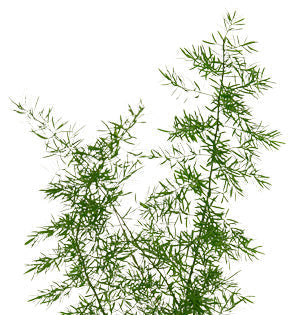
The leaves of Sprengeri fern are small, needle-like structures that form along thin, wiry stems. These stems grow in a cascading or trailing manner, creating a graceful and flowing effect.

Hundreds of small six petaled, star shaped flowers clustered at the top of leafless stems, 12 to 24 inches long. The flower stems rise above long, narrow strap-shaped leaves.

A large family of diverse shapes and sizes. Blossoms are tiny white or yellow flowers surrounded by papery bracts of lavender, white, pink, yellow and purple. Often the true flower is absent and the bracts make up the blossom.


Small, waxy, highly fragrant, star-shaped flowers. The blossoms are cut from a vine and sold stemless in humid, air tight boxes or bags.

Fragrant, tight clusters of small, four-petaled flowers that form dense spikes atop slender, single stems.


Succulents are a diverse group of plants known for their thick, fleshy leaves and stems that store water, allowing them to thrive in arid conditions. They come in various shapes, sizes, and colors. Some have rosette-shaped leaves, while others have cylindrical or paddle-shaped foliage. Their leaves can be smooth, hairy, spiky, or textured, depending on the species.

Very large daisy-like composite blossoms, with petals (ray florets) surrounding a contrasting center (disc florets).

Distinctive pea-vine type foliage with tendrils. Three to four blossoms of very delicate petals on stems 6 to 8 inches in length branching off from the vine.

Tiny, densely clustered florets with fringed petals and often a contrasting “eye” on multi-branched flat-topped clusters at stem ends.

Large, arching fronds, 20 inches to 60 inches in length. Each frond consists of numerous leaflets, or pinnae, which are arranged alternately along the stem. The leaflets have toothed margins, giving the fronds a serrated appearance.